

Table of Contents
Introduction
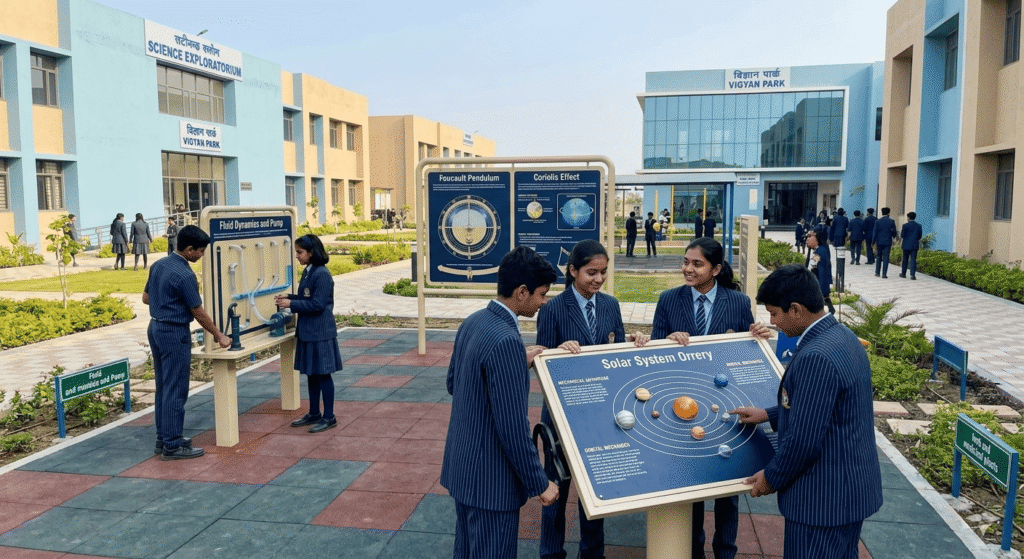
Schools across India are investing in experiential learning infrastructure. Science parks have become one of the most effective ways to teach scientific concepts outside traditional classrooms.
Students learn faster when they can see, touch, and interact with scientific principles.
A well-designed science park improves curiosity, engagement, and practical understanding.
The challenge is selecting the right equipment.
Many schools install random models without proper planning. This reduces educational value and increases maintenance costs.
This guide highlights the Top 15 Science Park Equipment Models for Schools in India and explains how institutions can build an effective outdoor learning environment.
Why Science Park Equipment Matters
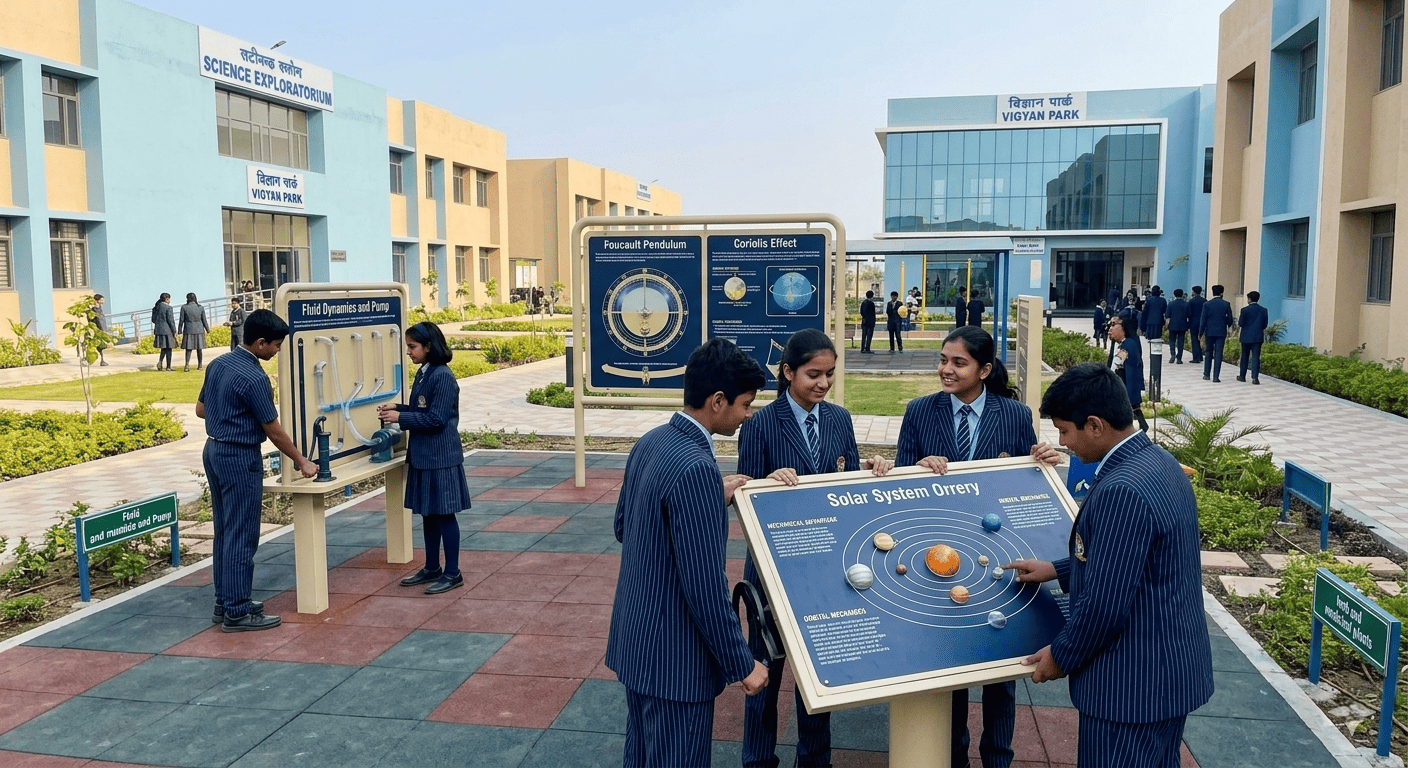
Science park equipment transforms theoretical learning into practical experiences.
Benefits include:
- Improved concept retention
- Interactive learning
- Better STEM education
- Enhanced campus infrastructure
- Higher student participation
Many school infrastructure development projects now include dedicated science parks.
Top 15 Science Park Equipment Models for Schools in India
1. Giant Lever Model
Demonstrates:
- Mechanical advantage
- Force distribution
- Balance principles
2. Pendulum Model
Helps students understand:
- Oscillation
- Time measurement
- Motion principles
3. Whispering Dish
Demonstrates sound reflection and transmission.
A favorite among students.
4. Periscope Model
Explains:
- Reflection
- Optical pathways
- Light behavior
5. Parabolic Reflector
Useful for studying sound waves and reflection.
6. Human Gyroscope
Demonstrates:
- Angular momentum
- Rotational motion
7. Sun Dial
Shows practical applications of astronomy and timekeeping.
8. Energy Conversion Wheel
Explains transformation of mechanical energy.
9. Wave Motion Demonstrator
Useful for physics education.
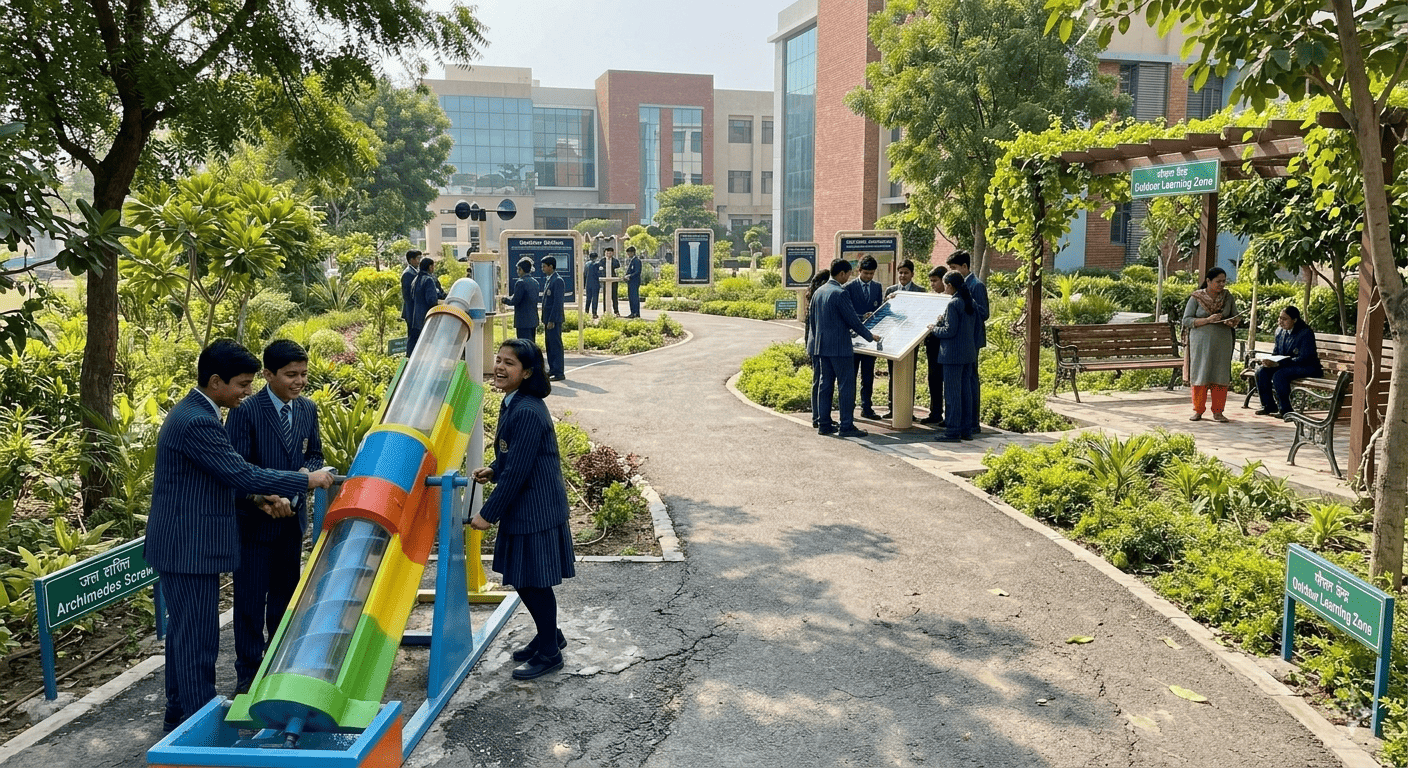
10. Archimedes Screw
Demonstrates water lifting principles.
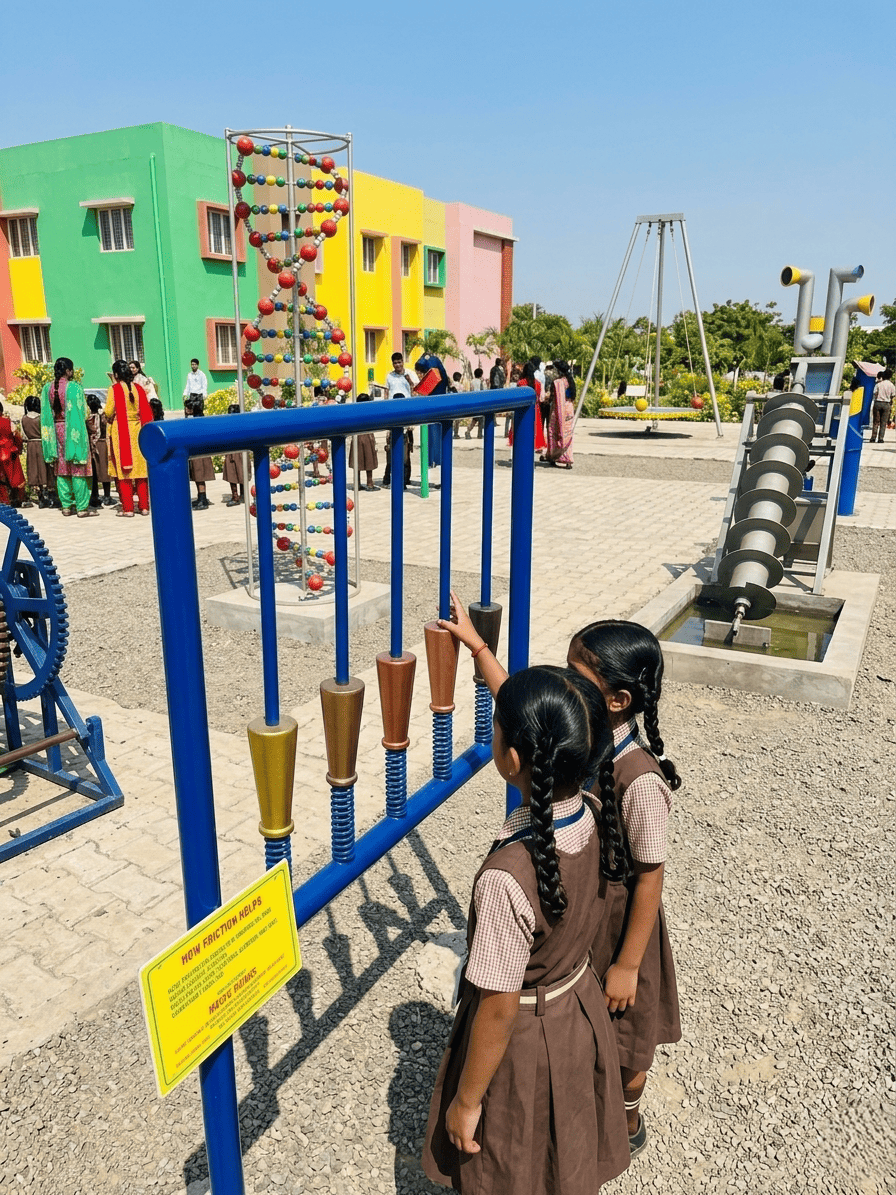
11. Optical Illusion Exhibit
Improves understanding of visual perception.
12. Gear Train Demonstrator
Shows mechanical transmission principles.
13. Newton Color Disc
Explains color theory and light behavior.
14. Renewable Energy Demonstration Unit
Covers:
- Solar energy
- Wind energy
- Sustainable technology
15. Mathematical Puzzle Station
Encourages problem-solving and logical thinking.
How to Select the Right Science Park Models
Not every school requires all 15 models.
Selection should depend on:
Student Age Group
Primary schools:
- Simple interactive models
Secondary schools:
- Advanced physics demonstrations
Available Space
Evaluate:
- Site dimensions
- Movement pathways
- Future expansion opportunities
Educational Objectives
Choose models aligned with:
- CBSE curriculum
- ICSE curriculum
- STEM initiatives
Budget
Invest in quality rather than quantity.
A smaller science park with durable equipment often performs better.
Recommended Science Park Layout
A science park should be divided into learning zones.
| Zone | Recommended Models |
|---|---|
| Physics Zone | Pendulum, Lever, Wave Motion |
| Sound Zone | Whispering Dish, Parabolic Reflector |
| Optics Zone | Periscope, Optical Illusions |
| Renewable Energy Zone | Solar and Wind Demonstrators |
| Mathematics Zone | Puzzle Stations |
This improves educational flow and usability.
Material Selection Matters
Equipment quality directly impacts lifespan.
Many institutions prefer FRP-based solutions because they offer:
- Corrosion resistance
- Low maintenance
- Better weather performance
Popular installations often combine:
- Science park models
- Playground equipment
- FRP multiplay systems
- Outdoor educational infrastructure
This creates a complete learning environment.
Why Bravia Fibrotech
Bravia Fibrotech provides educational infrastructure solutions designed for schools, municipalities, contractors, and government institutions.
Core offerings include:
- Science Park Equipment
- Playground Equipment
- FRP Products
- Outdoor Gym Equipment
Key strengths include:
- Engineering-based design
- Durable manufacturing
- Technical consultation
- Installation support
- Project customization
Whether a school requires a small science park or a complete outdoor educational campus, Bravia Fibrotech provides practical solutions designed for long-term use.
Frequently Asked Questions
What is the ideal size of a school science park?
Most schools can begin with 1,000–3,000 square feet and expand later.
Which science park model is most popular?
Pendulum models, whispering dishes, and optical exhibits remain highly popular.
Is FRP better than metal for science parks?
FRP generally offers lower maintenance and better weather resistance.
How much does a science park cost?
Costs vary depending on equipment quantity, layout, and customization.
Can government schools install science parks?
Yes. Many educational and infrastructure projects include science park installations.
Request a Catalog or Factory-Direct Quote
The right science park can improve student engagement for years.
Before selecting equipment, evaluate educational value, material quality, installation support, and manufacturer capability.
For customized science park solutions, technical consultation, and project planning support, contact Bravia Fibrotech.
Website: https://www.braviafibrotech.in
Contact: +91 9145240111
+91 7517077511
Email: contact@braviafibrotech.in
Request a catalog, project references, and a factory-direct quote today.
Build an outdoor learning environment that inspires curiosity and practical learning.